Although both ammonium metatungstate (AMT) and ammonium heptamolybdate (AHM) are important transition metal compounds with wide applications in the chemical industry, they differ in terms of chemical composition, molecular structure, physical and chemical properties, production technologies, and specific applications.
1. Molecular Structure Differences
Ammonium Metatungstate (H???N?O??W??) is a white powder belonging to the class of tungstates, while Ammonium Heptamolybdate ((NH?)?Mo?O??·4H?O) is a molybdate compound that appears as a colorless or slightly greenish rhombic crystal. The two compounds differ significantly in molecular architecture. AMT contains 12 tungsten atoms forming complex polyhedral anionic clusters connected by oxygen bridges, coordinated with six ammonium ions.
In contrast, AHM consists of seven molybdenum atoms arranged in edge- and corner-sharing octahedra forming chain-like structures, also bonded with ammonium ions. These differences result in notable variations in coordination mode, atomic distances, and charge distribution, which subsequently affect their solubility, thermal stability, and catalytic activity.
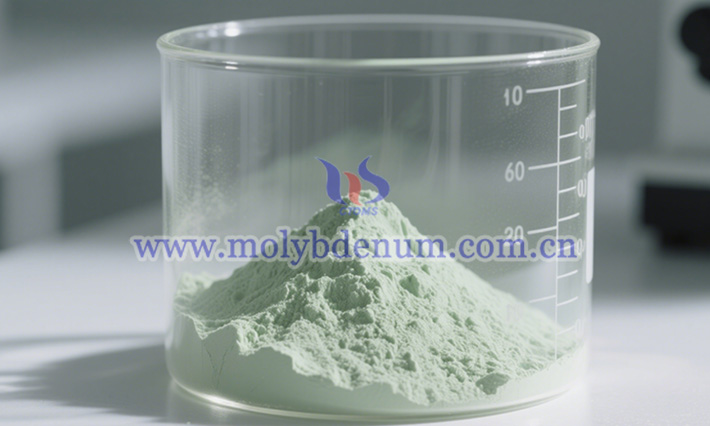
ammonium heptamolybdate image
2. Property Comparison
Appearance and Solubility:
AMT is a white to slightly yellowish powder with high water solubility at 20?°C, up to 300?g/100?mL, significantly higher than AHM.
Thermal Stability and Decomposition:
AMT slowly releases ammonia and water under heat, forming tungsten oxide, with a wide decomposition temperature range. AHM decomposes into molybdenum trioxide (MoO?) and ammonia under heating, and the process is more vigorous, often accompanied by the release of crystal water.
3. Divergent Industrial Applications
Catalysis:
AMT is a key precursor in industrial catalysts used in petroleum reforming and hydrodesulfurization. Its multi-nuclear tungsten-oxygen clusters provide highly dispersed active sites. AHM, on the other hand, is commonly used in selective oxidation reactions, where its chain structure facilitates linear active centers.
Materials Science:
AMT can be calcined and reduced at high temperatures to prepare nano-tungsten or tungsten carbide powders for use in hard alloys and cutting tools. AHM is used to synthesize molybdenum disulfide (MoS?) nanosheets, which serve as lubricants or anode materials in lithium-ion batteries.
Analytical Chemistry:
Due to its high purity and stability, AHM is often used as a standard substance for molybdenum content analysis. In agriculture, its water-soluble molybdate ions can be directly absorbed by plants to enhance nitrogenase activity. AMT is less commonly used directly in agriculture but may be converted into tungstate salts to adjust soil pH.
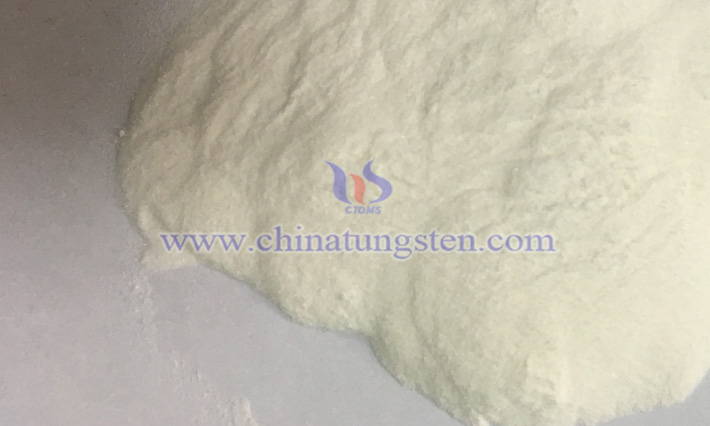
ammonium metatungstate image
4. Differences in Production Technologies
AMT Production – Ion Exchange Method:
APT (Ammonium Paratungstate) is treated with strong acid cation exchange resin to form metatungstate solution, which then reacts with ammonia solution to crystallize AMT.
AHM Production – Acid Precipitation Method:
After roasting molybdenum concentrate, the resulting ammonium molybdate solution is adjusted to a pH of 2–3 to precipitate AHM.