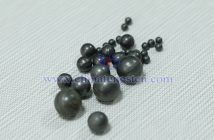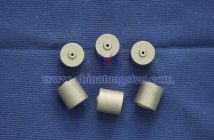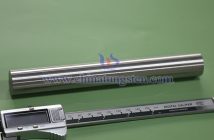
Tungsten-copper (WCu) contacts, like tungsten-silver (WAg) contacts, are highly representative types of tungsten contacts. The reason their physicochemical properties, production methods, and applications are largely similar lies in the fact that both are manufactured using the refractory metal tungsten as a base. However, there is a cost difference between silver and copper, with silver generally being more expensive than copper.
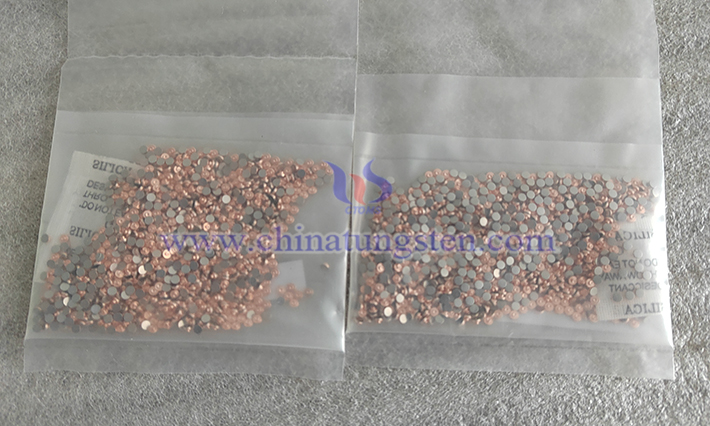
Tungsten-copper contacts (Tungsten Copper Contact) are electrical contacts made with tungsten as the base material and copper as the auxiliary material, forming a pseudo-alloy product composed of tungsten and copper. Thanks to their excellent electrochemical properties, they are widely used in electrical equipment.
In terms of physicochemical properties, WCu contacts integrate the strengths of tungsten and copper. They feature a high melting point, high density, and high hardness, along with good plasticity and a low thermal expansion coefficient. Additionally, they exhibit excellent high-temperature resistance, strong corrosion resistance, ideal electrical and thermal conductivity, and superior performance in arc erosion resistance and anti-welding properties. Notably, when the environmental temperature exceeds 3000°C, the copper in WCu contacts liquefies and evaporates, absorbing significant heat during the process, which provides a “sweating cooling” effect. Generally, the higher the copper content, the better the electrical conductivity and plasticity of the WCu contacts.
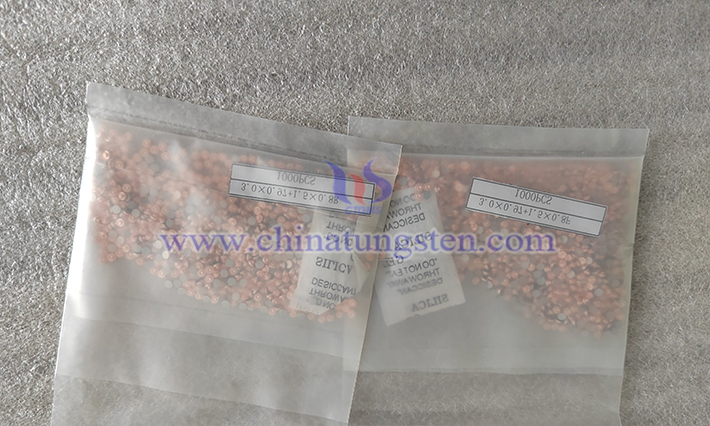
The preparation of WCu contacts can be achieved through infiltration, copper oxide powder, or injection molding methods. The infiltration method involves pressing tungsten powder into the desired shape, sintering it into a tungsten skeleton, and then infiltrating it with copper. The copper oxide powder method entails reducing copper oxide powder to copper powder, which is then sintered with tungsten powder; in the sintered compact, copper forms a continuous matrix structure, while tungsten serves as a reinforcing framework. The injection molding method involves uniformly mixing nickel powder, copper-tungsten powder, and tungsten powder of varying particle sizes, adding an organic binder for injection molding, removing the binder, and then sintering to obtain the final product.
In terms of applications, tungsten-copper contacts are essential components in various electrical devices, including high-voltage circuit breakers, ultra-hydraulic switches, isolating switches, and grounding switches, where they play a supporting role. Leveraging their excellent properties, they ensure the stable operation of these devices, playing a key role in circuit on-off control and current conduction. Whether in power transmission and distribution systems or industrial equipment power control scenarios, tungsten-copper contacts hold a significant position. Their arc erosion resistance and anti-welding properties allow the equipment to maintain a long service life and reliable performance, even under frequent operations, high voltage, and large current conditions.