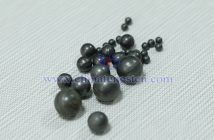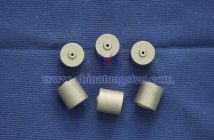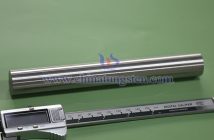
The manufacturing process of high-density tungsten alloy shielding components centers on powder metallurgy technology, combined with subsequent processing, forming a mature production workflow. The specific steps are as follows:
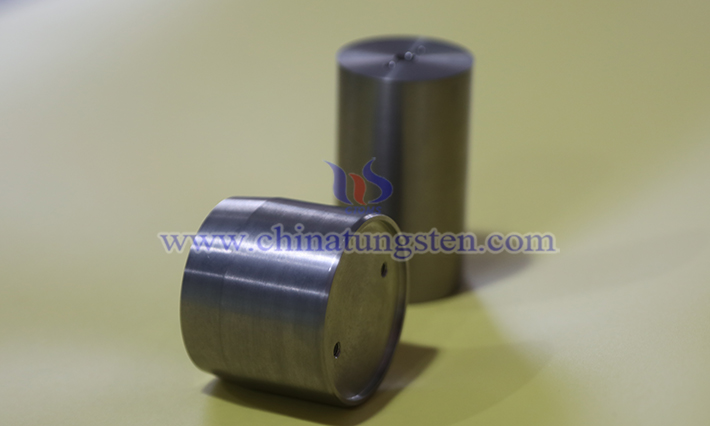
First, Raw Material Preparation: Tungsten powder serves as the primary raw material (typically 85%-97% content), blended with binder powders such as nickel, iron, or copper. These binders enhance the formability of the tungsten powder and the mechanical properties of the alloy. The powders are mixed in proportion, and methods like ball milling are used to ensure uniform mixing, creating a stable blended powder.
Second, Pressing and Forming: The mixed powder is loaded into a mold and pressed into a green compact with a certain shape and density, such as the preliminary forms of shielding blocks or plates. This step determines the basic dimensions of the shielding component. For complex shapes like curved shielding covers, isostatic pressing may be employed, using a liquid medium to apply uniform pressure, improving the uniformity of the green compact’s density.
Third, Sintering: The green compact is placed in a sintering furnace, heated under a protective atmosphere of hydrogen or inert gas, and held at temperature for several hours. At high temperatures, the binder melts and diffuses with the tungsten particles, causing the powder particles to sinter and densify into a high-density tungsten alloy blank.
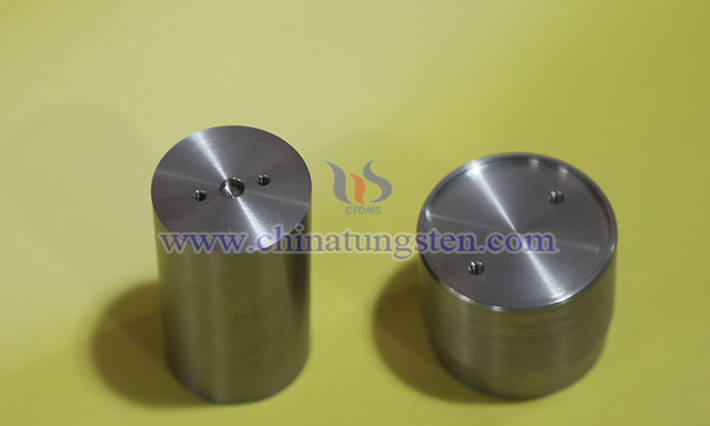
Fourth, Machining: The sintered blank undergoes mechanical processing such as cutting, grinding, and drilling to achieve the designed dimensional accuracy, meeting the assembly requirements of the shielding component with the equipment. For scenarios with high surface requirements, such as medical devices, polishing is performed to reduce surface defects.
Fifth, Performance Testing: The finished product’s key indicators, including density, hardness, and ray shielding rate, are tested to ensure compliance with application standards (e.g., specific radiation protection levels required in the medical field).
Compared to the production of lead shielding components (often involving casting or rolling, which are prone to porosity and low precision), the process for high-density tungsten alloy shielding components is more complex. However, it achieves greater density uniformity, structural strength, and dimensional accuracy, making it suitable for more demanding application scenarios.