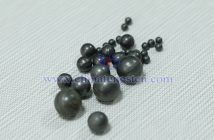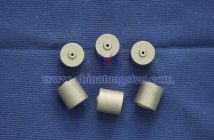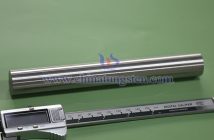
Corrosion-resistant tungsten carbide balls are tiny yet crucial "industrial teeth" in modern industry. Despite their small size, their superior comprehensive performance makes them irreplaceable under extremely harsh working conditions, making them core components of many high-end equipment and precision instruments.

This extraordinary performance stems primarily from their unique material composition. Corrosion-resistant tungsten carbide balls mainly use high-hardness tungsten carbide (WC) as the framework and cobalt (Co) and nickel (Ni) as binder phases. Unlike conventional carbide, which often uses cobalt as a binder, the key to corrosion-resistant models lies in the selection or optimization of the binder phase. For example, using nickel or nickel-chromium alloys as the binder phase significantly improves the alloy's stability in acidic, alkaline, and salt spray corrosive media, effectively resisting electrochemical corrosion and chemical erosion. Meanwhile, by optimizing the particle size and distribution of tungsten carbide powder and strictly controlling the sintering process, a fully dense material with a dense structure and extremely low porosity was finally obtained. This dense microstructure acts like a seamless "armor" for the alloy spheres, effectively preventing the intrusion of corrosive media, thus achieving a perfect combination of high strength, high hardness, and excellent corrosion resistance.
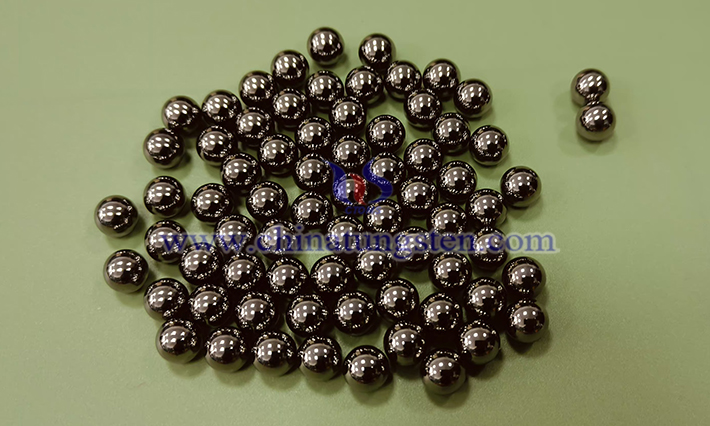
Because of these qualities, corrosion-resistant cemented carbide spheres have shone brightly in many key fields. In the chemical industry, they are key wear-bearing and sealing components in wear-resistant and corrosion-resistant pumps, valves, agitators, and measuring instruments, capable of withstanding the scouring and chemical erosion of highly corrosive media containing solid particles for extended periods. In the fields of marine engineering and shipbuilding, facing harsh environments of high salinity and high humidity, they are used in navigation instruments, deep-sea exploration equipment, and special propulsion systems to ensure the long-term reliability of precision transmission and positioning. In addition, corrosion-resistant cemented tungsten carbide balls play an indispensable role in industries with extremely demanding material performance requirements, such as oil drilling, pharmaceutical machinery, food processing (especially in acid and alkali environments), and aerospace, ensuring the long life, high stability, and safe operation of equipment in complex chemical environments.