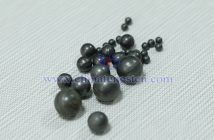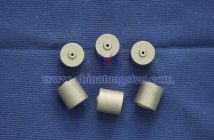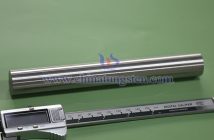
Cemented carbide balls are high-performance spherical materials with tungsten carbide (WC) as the main component and cobalt (Co) as the binder. Their diameter typically ranges from 0.3mm to 50mm, with a hardness of HRA 88-93 and a density of 14.5-15.0 g/cm3. They are widely used in automotive component manufacturing. Their excellent wear resistance, pressure resistance, and corrosion resistance enable them to perform exceptionally well under high load and high-speed conditions, significantly improving component lifespan and reliability.

1. Main Application Areas of Cemented Carbide Balls for Automotive Components
Bearing Systems: Cemented carbide balls are commonly used in automotive wheel bearings, transmission bearings, and engine crankshaft bearings. As a core component of ball bearings, its high hardness reduces the rolling friction coefficient (<0.001), its wear resistance is 10-20 times that of steel balls, it can withstand contact stresses exceeding 1500MPa, reducing clearance increases caused by wear and ensuring stability under high-speed rotation (>10000rpm). Compared to traditional steel balls, its lifespan is extended by 2-5 times, reducing maintenance frequency.
Fuel Injection Systems: In high-pressure common rail diesel injectors or gasoline direct injection systems, cemented carbide balls act as sealing balls for precision valve seats. Diameter tolerance is controlled within ±0.5μm, and surface roughness Ra<0.02μm, ensuring zero leakage under 200MPa injection pressure. Corrosion resistance resists erosion from sulfides and moisture in fuel, with a service life exceeding 500,000 kilometers, improving spray atomization accuracy and reducing emissions (compliant with China VI standards). Steering and Suspension Systems: Used in steering knuckle ball joints, suspension CV joints, etc. Cemented carbide balls exhibit high fatigue strength (>2000MPa), withstanding impact loads under complex road conditions and reducing ball head loosening and abnormal noise. Chrome plating or DLC coating further enhances weather resistance, adapting to temperature differences from -40℃ to 150℃.
Other precision components: such as ABS pump valve balls and turbocharger floating bearing balls, leveraging micron-level precision to ensure system response speed and safety.
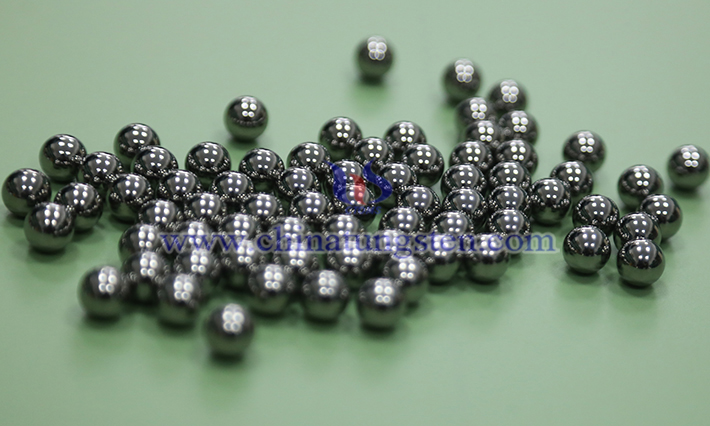
2. Performance Advantages of Cemented Carbide Balls for Automotive Components
Wear and Corrosion Resistance: WC particles have a hardness second only to diamond, resisting abrasive wear; the Co binder phase provides toughness, preventing brittle fracture.
High Precision: G5-G100 grade roundness <0.1μm, strong batch consistency, suitable for automated assembly. Thermal Stability: Coefficient of thermal expansion 4.5-6.0×10??/℃, dimensional stability at high temperatures. Environmentally Friendly and Economical: Although the initial cost is higher than steel balls, the total life cycle cost is 30%-50% lower, reducing downtime losses.