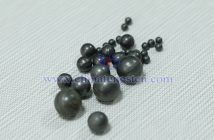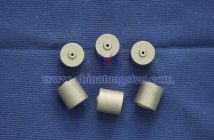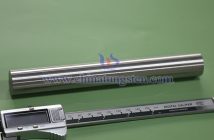
Tungsten carbide balls are critical precision components in fluid control systems, primarily made of tungsten-cobalt alloy (WC-Co), possessing extremely high hardness, wear resistance, and corrosion resistance. In industries such as petroleum, chemical, pharmaceutical, and water treatment, tungsten carbide balls are widely used in ball valves, check valves, and metering pumps to ensure precise control and long-term stable operation of fluid media.

1. Material Properties of Tungsten Carbide Balls for Fluid Control
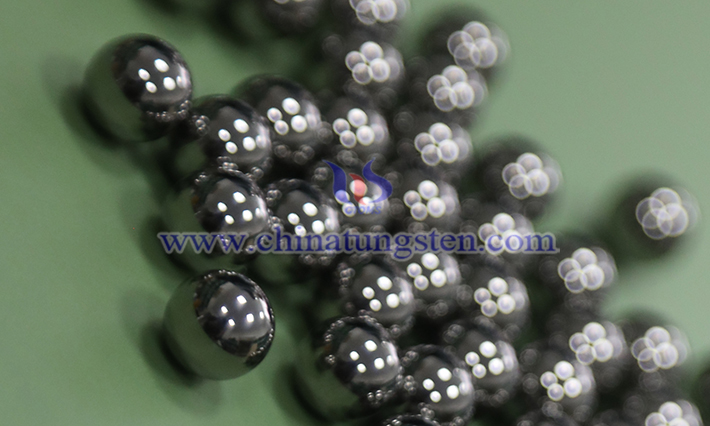
The hardness of tungsten carbide balls typically reaches HRA 88-92, equivalent to HV 1500-1700, far exceeding that of stainless-steel balls (HRC 50-60). Their density is approximately 14.5-15.0 g/cm3, providing excellent impact resistance. The cobalt content (Co 6%-12%) affects the balance between toughness and wear resistance: low cobalt and high hardness are suitable for high-pressure abrasive environments, while high cobalt enhances crack resistance. A surface roughness Ra below 0.025 μm ensures zero leakage during sealing. 1. Temperature range: -100℃ to 500℃; resistant to acid and alkali corrosion (such as HCl, NaOH); suitable for harsh media.
2. Manufacturing Process of Tungsten Carbide Balls for Fluid Control
Powder metallurgy method is used: high-purity tungsten powder and cobalt powder are mixed, ball-milled, pressed into blanks, vacuum sintered (1400-1500℃), and densified by HIP isostatic pressing. Precision grinding and polishing achieve micron-level tolerances (G5-G100 grade, ISO 3290 standard). Diameter range: 0.5 mm to 100 mm; common specifications are φ6.35 mm and φ12.7 mm for DN50-DN200 ball valves.
3. Advantages of Tungsten Carbide Balls in Fluid Control Systems
In ball valves, tungsten carbide balls are paired with cemented carbide seats to achieve API 598 zero-leakage seals. Wear life is 10-50 times that of stainless-steel balls, reducing maintenance costs. In check valves, they prevent backflow; in metering pumps, they ensure pulse accuracy. Compared to ceramic balls, cemented carbide has better toughness, preventing brittleness; compared to titanium alloys, its wear resistance is 5 times better.