Tungsten-nickel-copper alloy and tungsten-nickel-iron alloy are both typical tungsten-based alloys, with tungsten mass fraction usually 90%~97%, widely used in aerospace, radiation protection, military and precision machinery fields. The following mainly introduces the main differences between tungsten-nickel-copper alloy and tungsten-nickel-iron alloy.
Both tungsten-nickel-copper alloy and tungsten-nickel-iron alloy have high density (17.0~18.5 g·cm?3, increasing with tungsten content), relatively high strength (tensile strength 700~1000 MPa, elongation 5%~20%, hardness 25~35 HRC), low thermal expansion coefficient (4.5~7.0×10?? K?1, good thermal matching with various ceramic and glass materials), excellent γ-ray and X-ray shielding performance, and support conventional and special processing methods such as turning, milling, grinding, drilling, electrical discharge machining and wire cutting. However, there are certain differences between the two in composition, performance and application.
In terms of composition: the binder phase of tungsten-nickel-copper alloy is nickel-copper (typical Ni:Cu ratio 7:3 or 8:2); the binder phase of tungsten-nickel-iron alloy is nickel-iron (typical Ni:Fe ratio 7:3, 8:2 or 9:1).
In terms of performance: tungsten-nickel-copper alloy is non-magnetic or extremely weakly magnetic material, relative magnetic permeability ≤1.02; tungsten-nickel-iron alloy has obvious ferromagnetism, relative magnetic permeability generally in the range of 1.5~10, and can be attracted by permanent magnets. Under the same tungsten content, the density of tungsten-nickel-iron alloy is usually higher than that of tungsten-nickel-copper alloy. Because the electrical conductivity and thermal conductivity of copper are significantly higher than those of iron, the electrical and thermal conductivity of tungsten-nickel-copper alloy are obviously better than those of tungsten-nickel-iron alloy. The elongation of tungsten-nickel-copper alloy is usually higher than that of tungsten-nickel-iron alloy, and the fracture toughness is better. Tungsten-nickel-copper alloy has stronger corrosion resistance in atmospheric and weakly acidic environments; tungsten-nickel-iron alloy may have slight surface rust when stored for a long time under humid conditions. Affected by copper price, the raw material cost of tungsten-nickel-copper alloy is usually 15%~40% higher than that of tungsten-nickel-iron alloy.
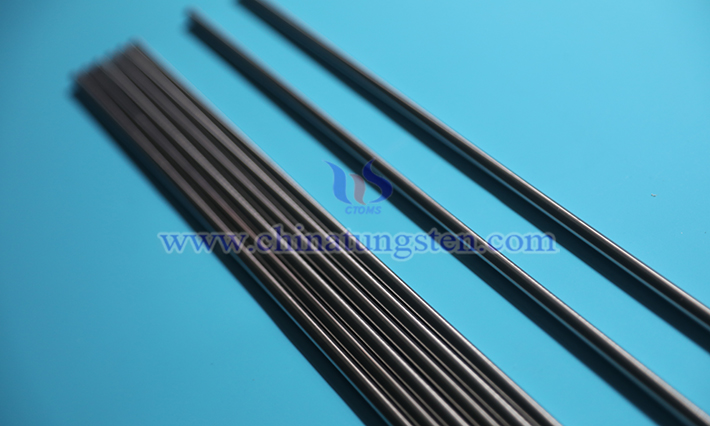
In terms of application: tungsten-nickel-copper alloy is a non-magnetic material, mainly used in aviation gyroscope rotors, satellite attitude control flywheels, MRI equipment waveguide parts, resistance welding electrodes, heat sinks and other strictly non-magnetic occasions; tungsten-nickel-iron alloy is a magnetic material, widely used in kinetic energy armor-piercing projectile cores and preformed fragments, CT machine collimators, nuclear industry shielding containers, ordinary mechanical counterweight parts and other fields with no strict requirements for magnetism.
In engineering applications, the primary judgment basis is whether the working condition has strict restrictions on magnetism: wherever strong magnetic field environment, precision magnetic measuring instruments or MRI peripheral components are involved, tungsten-nickel-copper alloy is selected; if there is no requirement for magnetism or weak magnetism is allowed, tungsten-nickel-iron alloy has significant cost advantages under the premise that performance is satisfied and can be used as the preferred material.