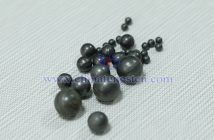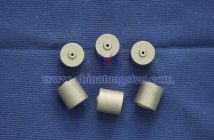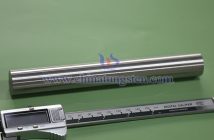
Tungsten alloy rings can be categorized into numerous types based on differences in binder composition, density level, magnetic properties, functional orientation, and ultimate application fields.

The most fundamental and widely used classification is by binder phase composition, dividing them into three main series. W-Ni-Fe rings contain a certain proportion of iron, imparting controllable weak magnetism along with superior strength and thermal conductivity; they are commonly used in rotating balance rings, flywheel energy-storage rings, and engine crankshaft counterweight rings that require magnetic response positioning or electromagnetic actuation. W-Ni-Cu rings eliminate iron to achieve non-magnetic characteristics, offering better seawater corrosion resistance and biocompatibility than iron-containing systems, making them the preferred choice for MRI-compatible collimator rings, magnetic-bearing retainer rings, non-magnetic gyroscope support rings, and deep-sea corrosion-resistant ballast rings. The third category consists of enhanced variants such as W-Ni-Fe-Mo, W-Ni-Fe-Re, or W-Ni-Co systems, which, through solid-solution or second-phase strengthening with molybdenum, rhenium, or cobalt, maintain high strength and creep resistance at elevated temperatures.
By density level, they are divided into standard density (17.0–17.6 g/cm3), high density (17.7–18.2 g/cm3), and ultra-high density (18.3–18.8 g/cm3) ranges. Standard-density rings are mostly used in cost-sensitive civilian counterweight and vibration-motor eccentric rings; high-density grades represent the mainstream in industrial and medical applications, covering the vast majority of collimator, shielding, and industrial balance rings; ultra-high-density rings are specifically designed for extremely space-constrained scenarios with stringent mass requirements.
From the perspective of magnetic behavior, tungsten alloy rings are clearly classified into weakly magnetic, non-magnetic, and diamagnetic types. Weakly magnetic rings primarily belong to the W-Ni-Fe series and are suitable for applications requiring magnetic attachment assembly or positioning; non-magnetic rings, represented by the W-Ni-Cu system, exhibit magnetic susceptibility as low as the 10?? order, satisfying zero-interference demands in strong magnetic field environments; a few special formulations achieve slight diamagnetism by precisely adjusting the Ni/Cu ratio.

Classification by functional orientation is gaining increasing attention. Radiation-shielding rings incorporate elements with high capture cross-sections such as boron, gadolinium, samarium, or hafnium to achieve combined γ-ray and neutron shielding; high-temperature-strengthened rings add rhenium, tantalum, or carbide particles to raise the recrystallization temperature above 1400 ℃, serving aerospace high-temperature rotating components; corrosion-resistant functional rings employ high-copper systems combined with surface PVD coatings for long-term service in offshore platform Christmas-tree ballast rings and subsea observation network nodes; self-lubricating rings are coated with DLC or MoS? for high-speed retainer rings in vacuum or oil-starved environments.
The most intuitive classification is by final application field: aerospace-grade (high strength, non-magnetic, radiation-resistant), medical-grade (non-magnetic, biocompatible, radiation-shielding), industrial-balance-grade (high density, wear-resistant), deep-sea-equipment-grade (ultra-high density, seawater-corrosion-resistant), nuclear-technology-grade (neutron-absorbing, high-temperature stable), and precision-instrument-grade (extremely low magnetic susceptibility, ultra-precision dimensions). The markedly different performance priorities across these fields continue to drive ongoing refinement and optimization of compositions and manufacturing processes.