Customs data show that from January to October 2025, China's cumulative rare earth imports were 85,890.3 tonnes, decreased by 23.3% year-on-year, with cumulative import value of RMB 10.34 billion, increased by 7.9% year-on-year; cumulative rare earth exports were 52,699.2 tonnes, increased by 10.5% year-on-year; cumulative export value was RMB 2.86 billion, decreased by 2.2% year-on-year. From this, it can be seen that from January to October this year, rare earth import volumes decreased significantly year-on-year, but import value increased year-on-year, indicating that the average import price of rare earths from January to October this year was higher than that from January to October last year; from January to October this year, rare earth export volumes increased year-on-year, but export value decreased year-on-year, indicating that the average export price of rare earths from January to October this year was lower than that from January to October last year. In addition, the year-on-year increase in rare earth export volumes from January to October this year also indicates that China's rare earth export volumes have not been significantly affected by policies.
According to CTIA GROUP LTD, from January to October 2025, prices of most rare earth products in China increased year-on-year. Among them, the average price of praseodymium oxide was RMB 502,227 per ton, increased by 26.13% year-on-year; neodymium oxide RMB 496,305 per ton, increased by 25.04% year-on-year; praseodymium-neodymium oxide RMB 475,921 per ton, increased by 22.24% year-on-year; praseodymium-neodymium metal RMB 584,586 per ton, increased by 21.18% year-on-year; terbium oxide RMB 6,837 per ton, increased by 18.18% year-on-year; dysprosium oxide RMB 1,654,655 per ton, decreased by 11.82% year-on-year; dysprosium-iron alloy RMB 1,610,833 per ton, decreased by 12.56% year-on-year.
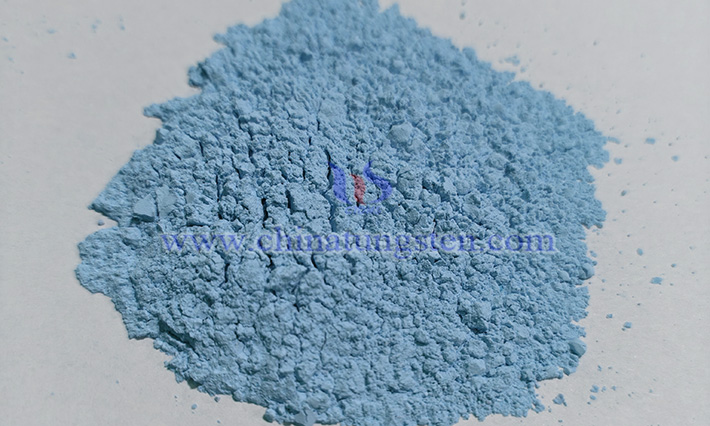
Rare earth elements (Rare Earth Elements, REE) refer to the 17 chemical elements in the periodic table consisting of the lanthanide series (lanthanum to lutetium, atomic numbers 57–71) plus scandium and yttrium. Based on atomic number and electron configuration, they are usually divided into light rare earths and heavy rare earths. Rare earth elements have active chemical properties, low electronegativity, easily form oxidation states, and ionic radii contract with increasing atomic number (lanthanide contraction), leading to strong mineral association and high separation difficulty.
It is worth mentioning that neodymium, praseodymium, and dysprosium have high magnetic anisotropy and coercivity, used to prepare NdFeB permanent magnets; cerium and lanthanum oxides are rich in oxygen vacancies with high catalytic activity; europium and terbium have sharp emission lines with high luminescence efficiency; gadolinium has a large neutron capture cross-section, suitable for nuclear control.