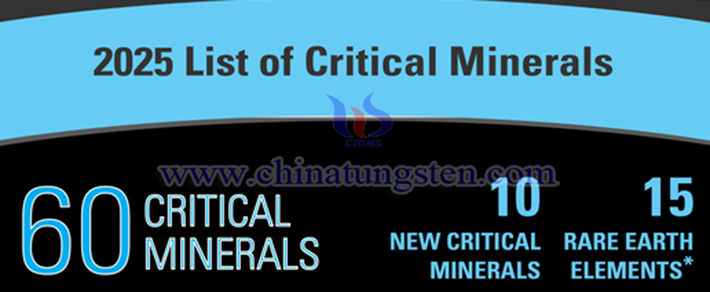
On November 6, 2025, the U.S. Geological Survey (USGS) published the final 2025 U.S. List of Critical Minerals, expanding from 50 to 60 minerals. The list includes all 50 from the 2022 version, plus 10 new additions: boron, copper, lead, metallurgical coal, phosphate, potash, rhenium, silicon, silver, and uranium.
Full 2025 Critical Minerals List (60): Aluminum, antimony, arsenic, barite, beryllium, bismuth, boron, cerium, cesium, chromium, cobalt, copper, dysprosium, erbium, europium, fluorspar, gadolinium, gallium, germanium, graphite, hafnium, holmium, indium, iridium, lanthanum, lead, lithium, lutetium, magnesium, manganese, metallurgical coal, neodymium, nickel, niobium, palladium, phosphate, platinum, potash, praseodymium, rhenium, rhodium, rubidium, ruthenium, samarium, scandium, silicon, silver, tantalum, tellurium, terbium, thulium, tin, titanium, tungsten, uranium, vanadium, ytterbium, yttrium, zinc, and zirconium.
Explore the US 2025 critical minerals list
Aluminum, used in almost all sectors of the economy?
Antimony, used in lead-acid batteries and flame retardants?
Arsenic, used in semiconductors?
Barite, used in oil and gas drilling and medical imaging?
Beryllium, used to manufacture metal alloys for aerospace and defense??
Bismuth, used in nontoxic metals, atomic research, and some medical applications?
Boron, used to harden steel and glass and in nuclear energy?
Cerium, used in catalytic converters, ceramics, glass, metallurgy, and polishing??
Cesium, used in atomic clocks for global positioning systems
Chromium, used in stainless steel??
Cobalt, used in batteries and metal alloys used in extreme temperatures?
Copper, used widely in wiring and cables?
Dysprosium, used in permanent magnets, data storage devices, and lasers?
Erbium, used in fiber optics, optical amplifiers, lasers, and glass colorants?
Europium, used in phosphors and nuclear control rods?
Fluorspar, used to make synthetic materials and plastics, iron and steel, ceramics, glass, and refineries?
Gadolinium, used in medical imaging, permanent magnets, and steel??
Gallium, used in semiconductors??
Germanium, used in fiberoptics, semiconductors and night vision??
Graphite , used in lubricants, batteries, and fuel cells?
Hafnium, used in nuclear control rods, semiconductors and aerospace??
Holmium, used in permanent magnets, nuclear control rods, and lasers?
Indium, used in flat-panel displays and touchscreens?
Iridium, used for electrochemical processes and as a chemical catalyst?
Lanthanum, used in? chemical catalysts, metallurgy, and batteries?
Lead, used in batteries, ammunition, glass and ceramics production?
Lithium, used in rechargeable batteries?
Lutetium, used for medical imaging, electronics, and some cancer therapies?
Magnesium, used in metal alloys used by aerospace, automotive and electronics industries?
Manganese, used in steel production and batteries?
Metallurgical coal, used in steel production?
Neodymium, used in permanent magnets, in medical and industrial lasers, and in the production of rubber?
Nickel, used to make high-strength steel, and rechargeable batteries?
Niobium, used to strengthen steel?
Palladium, used in catalytic converters, electronics, and as a chemical catalyst?
Phosphate, used in fertilizers?
Platinum, used in catalytic converters, aerospace alloys, chemical refining and petroleum processing?
Potash, used in most fertilizers??
Praseodymium, used in permanent magnets, batteries, aerospace metal alloys, ceramics, and colorants?
Rhenium, used in high-performance jet engines and gas turbines?
Rhodium, used in catalytic converters, electrical components, and as a chemical catalyst?
Rubidium, used in atomic clocks key to global positioning systems (GPS), data network syncing and research and development??
Ruthenium, used as catalysts, as well as electrical contacts and chip resistors in computers?
Samarium, used in permanent magnets, in nuclear reactors, and in cancer treatments?
Scandium, used to strengthen metal alloys, in fuel cells and in high-intensity lighting?
Silicon, used in silicon wafers fundamental to semiconductors?
Silver, used in electrical circuits, batteries, solar cells, and anti-bacterial medical instruments?
Tantalum, used in materials and electronic components that need to withstand high temperatures and harsh environments?
Tellurium, used in solar cells, to strengthen steel and copper, and to produce rubber, microchips and laser diodes?
Terbium, used in permanent magnets, fiber optics, lasers, and solid-state devices?
Thulium, used in lasers, x-ray devices, and metal alloys suitable for industrial products and nuclear reactor components?
Tin, used for food and beverage cans, circuit board components and corrosion-resistant metal coatings?
Titanium, used as a white pigment and in metal alloys, including for airplanes, spacecraft and military vehicle armor?
Tungsten, primarily used to make wear-resistant metals for jet engines, ammunition, and mining and cutting equipment?
Uranium, used as a nuclear fuel and medical applications?
Vanadium, used to strengthen iron and steel?
Ytterbium, used for catalysts, lasers, and metallurgy?
Yttrium, used in lighting and display technologies and in high-performance metal alloys?
Zinc, used as a coating to protect iron and steel from rust and corrosion?
Zirconium, used in nuclear reactors, aerospace heat shields and engine components